It’s been a busy couple of months, friends. Between posting Three Keys in the Desert in June, submitting a thesis draft in July, attending Nine Worlds in August (\o/ STILL TO WRITE A POST ABOUT THAT!) and now going abroad again in a week, it’s been.. a lot. A lot of really great things! But a lot nonetheless.
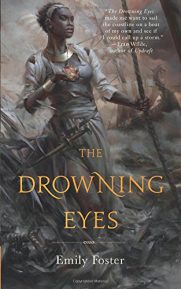
Which is why I’m especially pleased that I managed to squeeze in reading Emily Foster’s “The Drowning Eyes”, a novella I’d been wanting to get my hands on for a while, and review it for Strange Horizons.
Emily Foster’s debut novella is everything I like about modern fantasy. The world it builds is not a fictional Europe or a fictional North America; instead it’s set in a tropical climate, in the middle of an ocean, with many small islands dependent on the weather for trade and survival. The characters are a seafaring crew who don’t shy away from illegal work, people from the margins whose life philosophy is that money and happiness should be grabbed wherever they happen to be found. The cast is ethnically diverse and most of the action is centered on women, including older women, who occupy positions of authority within the small world a story of this length allows. All of this is refreshing and a pleasure to read and the reason I was excited to pick up the book in the first place.
And yet, as much as I wanted to fall in love with The Drowning Eyes, as much as I liked its setting and magical elements, as much I enjoyed its characters individually, there were a few structural problems that stood in the way of the book having true momentum. It’s not that the story isn’t enjoyable; it’s just that, considering its premise, it comes across as a little underwhelming.
Read the full review at Strange Horizons >>
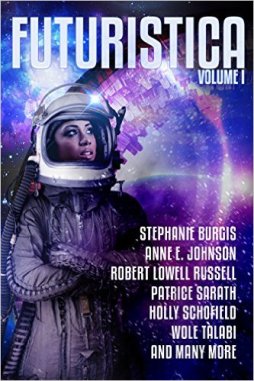 My short story “Life and Death in the Frozen City” has now been published in a real book that you can really buy!
 I recently wrote a review of Zen Cho’s excellent debut novel “Sorcerer to the Crown”, for Strange Horizons.
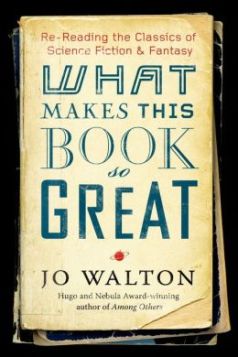 Jo Walton’s What Makes This Book So Great is a collection of essays, originally published as blog posts on Tor.com. Familiar with Walton’s fiction, I was drawn to review her collection of non-fiction essays partially because of what I’d heard of Walton’s reading habits and what she herself reveals at the beginning of the book—Walton chooses what books to read the way some people choose which ingredients to cook with, relying on a mix of old, trusted favorites and exciting, untested novelties.
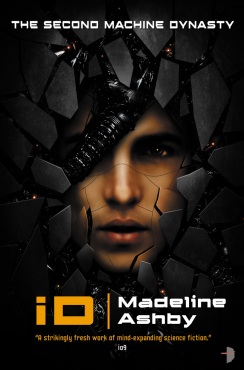 Ashby’s second novel, a sequel to her first, is engaging and better written than her debut, but it doesn’t address many of the flaws of the original. Ashby’s novels are set in a universe where humanity has created human-like robots, called “vN,” designed to carry out the tasks that human beings are no longer interested in undertaking. The technology was originally developed by New Eden, a cult that ostensibly wanted to create companions for all the sinners who would be left on Earth after Judgment Day.
 Madeline Ashby’s vN chronicles the life of Amy, a sentient vN-model robot born into a mixed robot-human family. Amy’s human father has slowed her rate of growth to that of a human child, in hopes of integrating her seamlessly into human society, but when Amy turns five her maternal grandmother, Portia (who is a perfect copy of Amy and her mother), shows up and tries to steal Amy away.
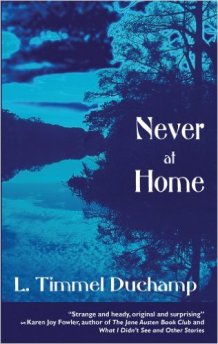 “Never at Home” is a collection of seven short stories which range from fantasy to science fiction, some taking place in mundane, contemporary settings and some having to do with intergalactic wars and alien species. The stories all feature female protagonists and deal with questions of human nature, morality, and the price one pays for interacting with the fantastical. However, the tone, pacing, and quality of the stories vary greatly. Some stories sparkle off the page while most drag on and seem to arrive nowhere.
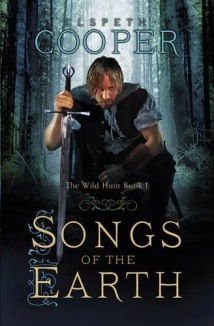 Songs of the Earth is the debut novel of Elspeth Cooper and the first in an projected trilogy. Its greatest strength is that it is very much an old school, traditional fantasy epic. Unfortunately, that is also its greatest weakness.