 I recently wrote a review of Zen Cho’s excellent debut novel “Sorcerer to the Crown”, for Strange Horizons.
“Zen Cho’s Sorcerer to the Crown is set in nineteenth-century London, where magical resources are scarce and only men of a certain standing are encouraged to practice sorcery. It tells the story of Zacharias Whyte, protégé of England’s premier magician, and Prunella Gentleman, the prodigy who can restore English magic to its former glory. Both essentially orphaned as babies, Zacharias and Prunella have grown up as outsiders in their home culture, and have had to navigate a social landscape that doesn’t quite know what to do with them. Zacharias was born to enslaved parents and purchased as an infant by the wealthy Englishman who would raise him as his son, and Prunella is the daughter of a British officer who came back from India with a daughter of mixed heritage and a bag of mysterious magical objects.”
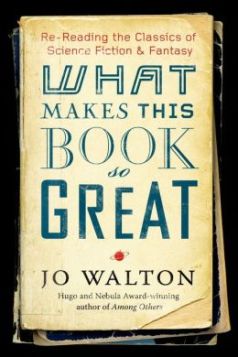 Jo Walton’s What Makes This Book So Great is a collection of essays, originally published as blog posts on Tor.com. Familiar with Walton’s fiction, I was drawn to review her collection of non-fiction essays partially because of what I’d heard of Walton’s reading habits and what she herself reveals at the beginning of the book—Walton chooses what books to read the way some people choose which ingredients to cook with, relying on a mix of old, trusted favorites and exciting, untested novelties.
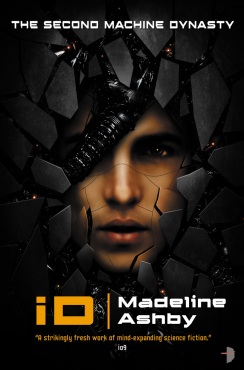 Ashby’s second novel, a sequel to her first, is engaging and better written than her debut, but it doesn’t address many of the flaws of the original. Ashby’s novels are set in a universe where humanity has created human-like robots, called “vN,” designed to carry out the tasks that human beings are no longer interested in undertaking. The technology was originally developed by New Eden, a cult that ostensibly wanted to create companions for all the sinners who would be left on Earth after Judgment Day.
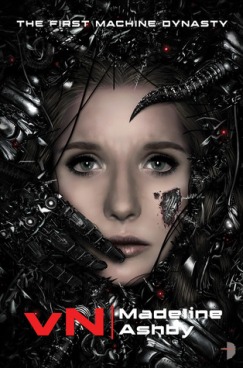 Madeline Ashby’s vN chronicles the life of Amy, a sentient vN-model robot born into a mixed robot-human family. Amy’s human father has slowed her rate of growth to that of a human child, in hopes of integrating her seamlessly into human society, but when Amy turns five her maternal grandmother, Portia (who is a perfect copy of Amy and her mother), shows up and tries to steal Amy away.
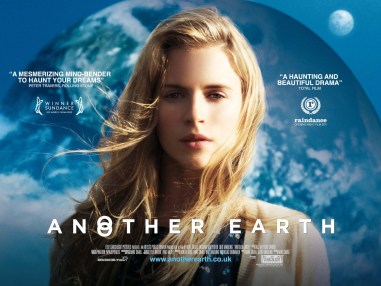 Another Earth opens on a night of dramatic occurrences. Rhoda Williams (Brit Marling), a brilliant seventeen-year-old who’s just gotten into MIT, causes a car accident which leaves a man in a coma and kills his wife and son. Just as she steps out of the car, shell shocked, to survey the damage she’s caused, the radio broadcasts that a new planet has been discovered in the night skies—one that scientists believe could be very similar to Earth.
 “Never at Home” is a collection of seven short stories which range from fantasy to science fiction, some taking place in mundane, contemporary settings and some having to do with intergalactic wars and alien species. The stories all feature female protagonists and deal with questions of human nature, morality, and the price one pays for interacting with the fantastical. However, the tone, pacing, and quality of the stories vary greatly. Some stories sparkle off the page while most drag on and seem to arrive nowhere.
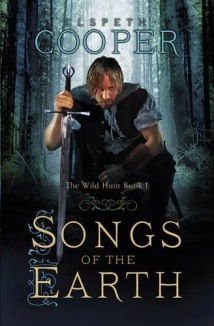 Songs of the Earth is the debut novel of Elspeth Cooper and the first in an projected trilogy. Its greatest strength is that it is very much an old school, traditional fantasy epic. Unfortunately, that is also its greatest weakness.